

















































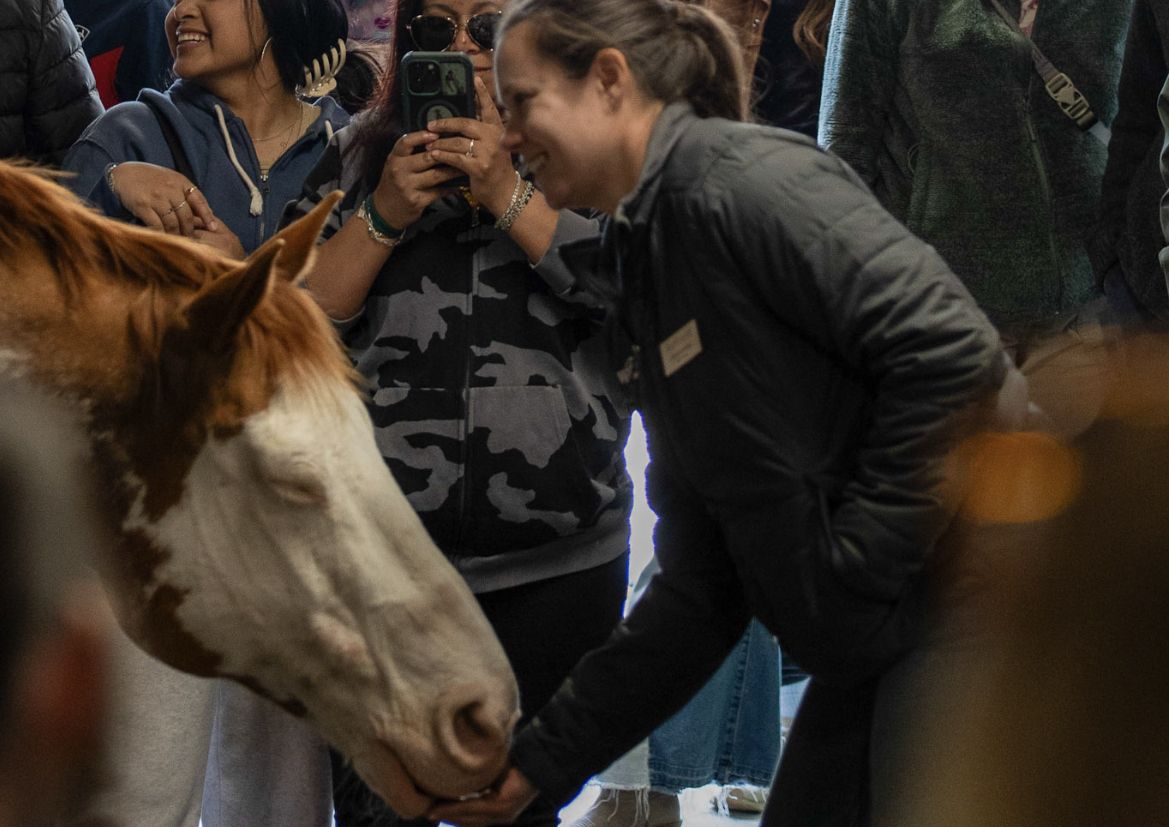
On a sunny afternoon, families gather on a farm to enjoy a picnic and watch an equine specialist groom a horse in a demonstration of equine therapy. On May 3, the nonprofit Gateway HorseWorks invited community members to its farm in Malvern for Picnic with the Ponies. This community-focused event showed how equine therapy, in which patients interact with horses therapeutically for mental health support, can assist people struggling with mental health issues.
“I think a lot of times being able to sit down and tell somebody about what we’ve experienced or what happened to us is overwhelming and sometimes traumatizing. Sometimes we don’t have the language or the words to describe that. I think that’s especially true for young people,” said Kristen de Marco, founder of Gateway HorseWorks and equine specialist. “The ability to connect with (horses), to build relationships with them and to explore hard topics that are oftentimes beyond language really (allows) people an emotional safety that we don’t necessarily get in other circumstances.”
This was the first year Gateway HorseWorks organized an event showing the community the behind-the-scenes of how a treatment team helps someone struggling with mental health problems through horse interaction. Picnic with the Ponies was a three-hour event, featuring live treatment demonstrations from Gateway HorseWorks treatment teams, horse care demonstrations, free lunch from a food truck, a stick horse race, and the opportunity for community members to explore the farm and meet the horses. Admission to the event cost $25 and all the proceeds contributed to the nonprofit’s five-year-long goal of raising $5 million to support people struggling with mental health problems. Attendees learned of Picnic with the Ponies on social media, community pages, emails and newsletters. Around 120 people attended the event.
“I heard really positive feedback (from) people that they loved being able to spend time on the farm (and) bring their kids,” de Marco said. “They loved the food and really enjoyed getting to have a little bit of a deeper dive into the how-it-works of our (therapy) sessions.”
De Marco grew up around horses and developed a deep connection with the animal. She discovered equine therapy during a difficult time in her life and decided to become an equine specialist, a process requiring 6,000 hours of training. In 2015, de Marco founded Gateway HorseWorks, working with a treatment team of equine specialists and mental health professionals to make equine therapy accessible to people in need of mental health support.
In addition to Picnic with the Ponies, which Gateway HorseWorks hopes to continue hosting every spring, the organization runs other annual fundraisers like Boots and Barbecue in September and Winter Wonder Farm in December. Funds from these events help the nonprofit organize free community programs helping incarcerated individuals, supporting youth on juvenile probation, serving veterans with post-traumatic stress disorder, and assisting patients in drug and alcohol recovery.
“I think everybody will struggle with mental health (issues) at some point in their lives, whether it’s through grief and loss or through an illness or through addiction in their family. I think that it’s really important to have a portfolio of treatment options available to people because what works for one person may not work for another,” de Marco said. “Making sure that mental health remains accessible and that there are varied approaches to helping people feel supported is paramount to our community’s health and wellness and especially for our own loved ones.”
Similarly, junior and equestrian Haasya Putumbaka has developed appreciation for the friendly and joyful nature of horses. Having started horseback riding around six and a half years ago, Putumbaka feels that being around horses has improved her own mental health.
“Horses can’t really talk to you and so they’re never really gonna judge you. They just automatically love you if you’re friendly to them,” Putumbaka said. “I feel like that really helps with your mental health, especially when sometimes you don’t really always want people to tell you something. You just have something next to you to help you out and be friendly.”
Erin Zhang can be reached at [email protected].