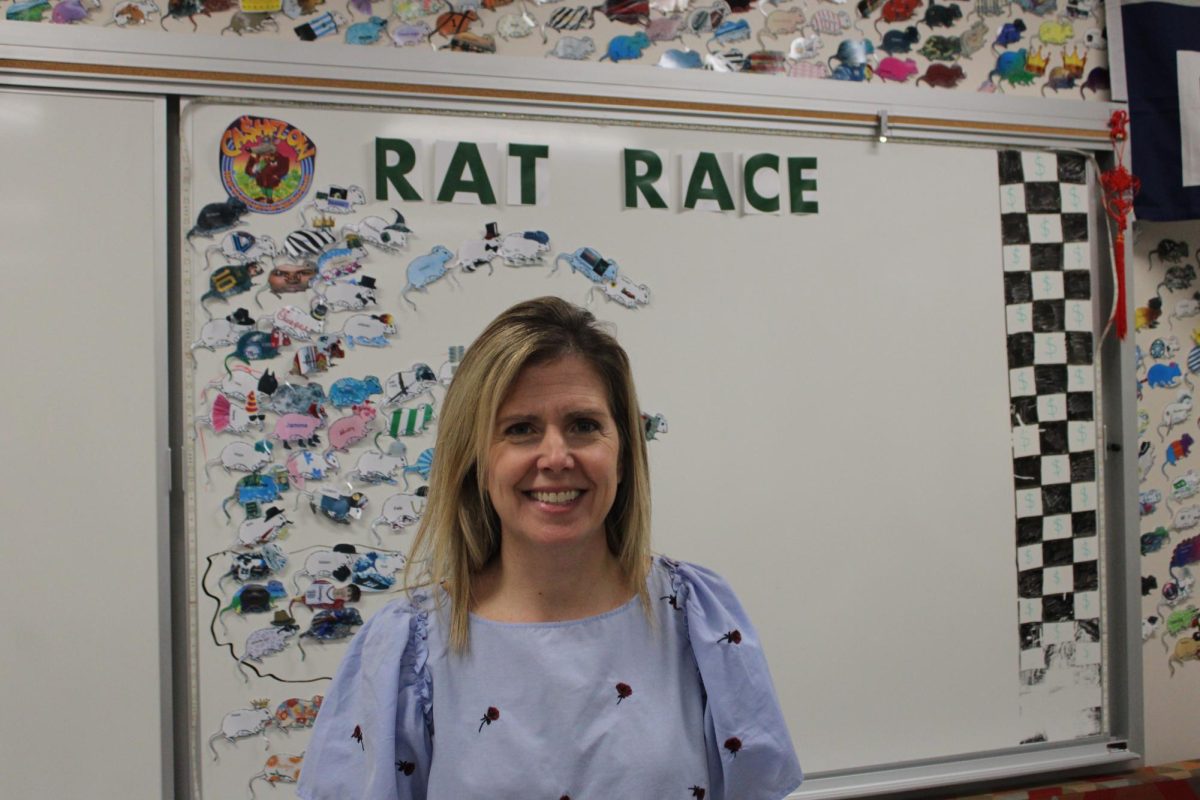





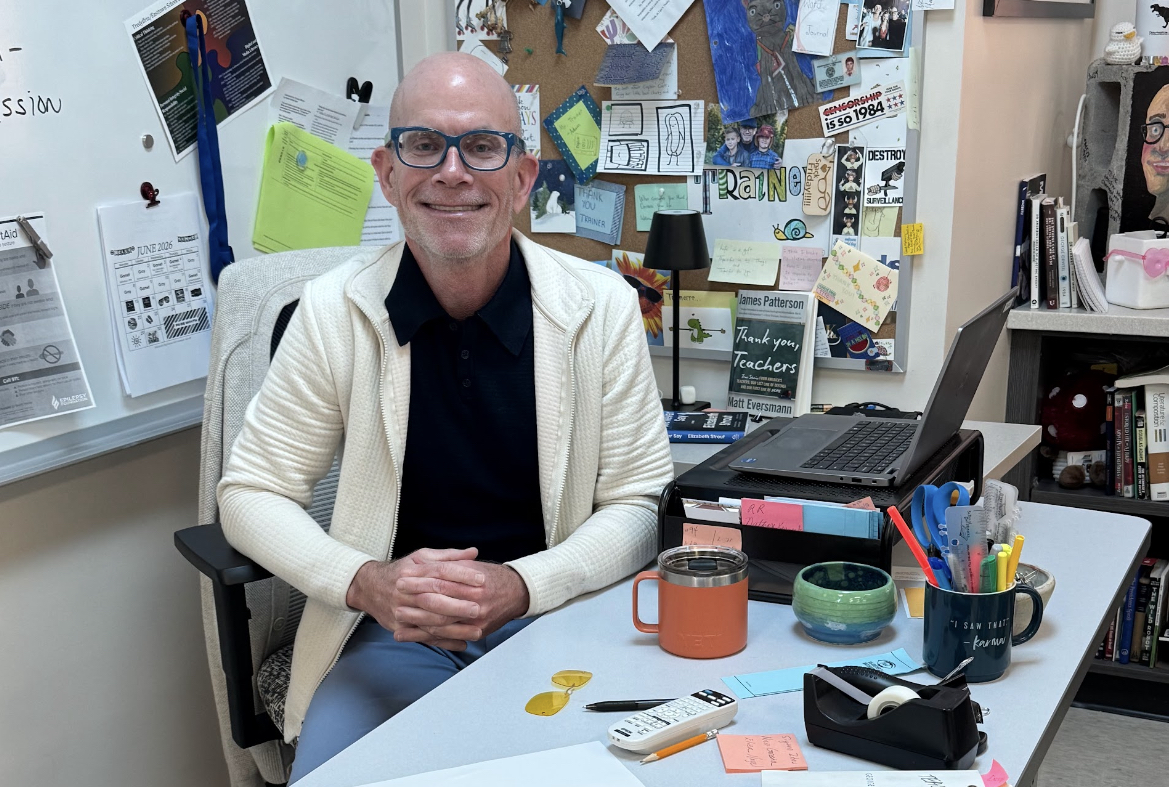































French teacher Jamie Cappelletti has taught at Conestoga since 2005. A Penn State graduate, Cappelleti explored several academic paths before ultimately pursuing a career in French education. She began as a student teacher in T/E and has since taught French at all levels, excluding AP, in the Central Bucks School and North Penn school districts. After taking a sabbatical leave, Cappelletti now teaches French 2 and 3 at Conestoga and French 2 at TEMS.
Q: Can you talk about your educational background and how you ended up at Conestoga?
A: I went to Penn State for my undergrad, and I didn’t really know what I wanted to major in, so there was this thing called Division of Undergraduate Studies, and so I did that for a while. And then, I thought about what I liked most about my high school experience. I originally thought I was going to be a math teacher, and then I realized I wasn’t that great at math in college, so I went the French route.
Q: How did your sabbatical leave affect you?
A: It changed the kind of teacher I am because I took a lot of classes on applied mindfulness and I thought everything kind of slowed down and I try to bring that into my teaching.
Q: What led you to pursue a career in French education?
A: My mother’s first language was Polish, and she would speak that at the house and try to teach me, but I was very resistant to it. I regretted not taking advantage of being able to speak another language. So, when I started learning French in high school, I thought it was a superpower: You could have conversations with friends and other people wouldn’t know.
Q: If you could teach another class, what would it be?
A: I would want to be able to teach yoga. I know that’s not going to happen in a public school, but I would love to teach it.
Q: What do you like most about teaching?
A: I like getting to know people and their different personalities and how I react to different personalities. I’m always trying to take a different perspective, and I have to come from a place of non-judgment. You can’t judge a student for things because you don’t know the whole story and I think it’s important to model that behavior.
Q: How do you help students with setbacks?
A: I’m a big advocate of second-chance learning, meeting with them one-on-one, maybe giving them a re-quiz. Just looking from a different vantage point, because for me, it’s hard to give a D or an F, because while everyone has to take responsibility for their own learning, I take it personally. It’s failing if I have students who are failing. So I always try to meet one-and-one and try to give them a second chance.
William Simon can be reached at [email protected].