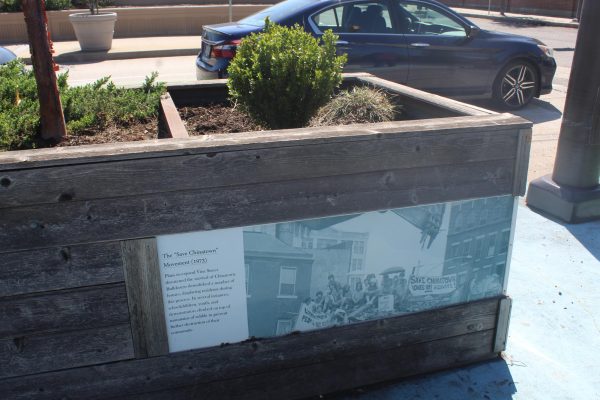
A Chinatown memory: A photo memorial stands proudly on the pavement, showcasing a moment of demonstrators climbing on top of rubble to protest the destruction of houses and expansion of Vine Street in Chinatown. The city planned to split Chinatown into two halves for the construction of a highway in 1973, but due to the efforts of the demonstrators displayed in the picture, the administration built strips of land on top of the highway to connect Chinatown’s halves. The plans for Vine Street also threatened to tear down the nearby Holy Redeemer Chinese Catholic Church and School with a ramp down from the highway. Protestors managed to save the church, which was the area’s only public community space at the time. (Alivia Woo / The Spoke)
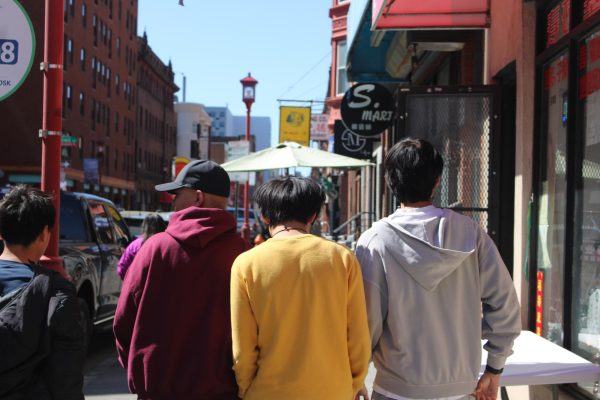
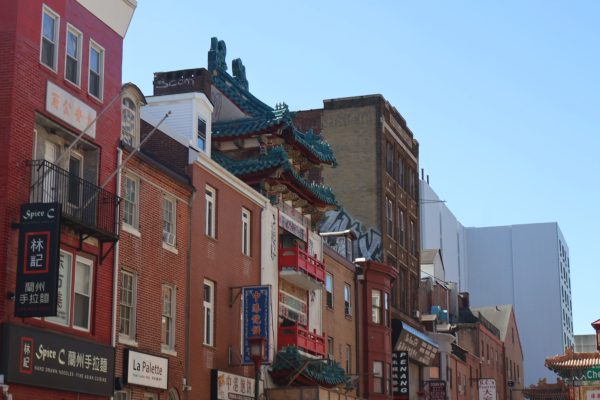
City excursion: Members of the Asian Student Alliance tour the streets of Chinatown. The Asian Student Alliance organized a trip to Chinatown on Tuesday, April 21 to explore its culture and historical significance. (Elizabeth Lu / The Spoke)
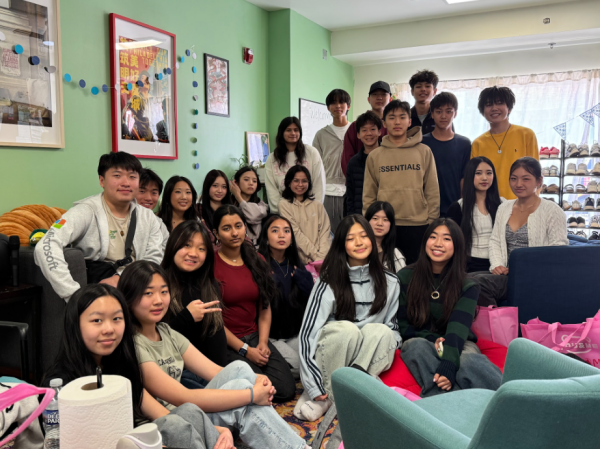
Lunchtime adventures: Students of the Asian Student Alliance gather together at the Ginger Arts Center for lunch and a time of camaraderie. The center was established to build a safe community for the youth in Chinatown and support different movements. (Elizabeth Lu / The Spoke)
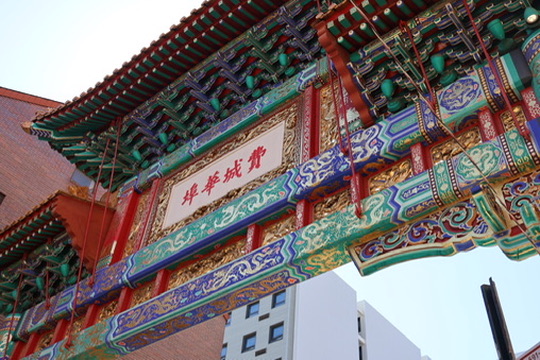
Hidden history: Near the distinctive entrance to Chinatown, a pagoda is tucked away between starker buildings, prominent for its display of traditional Chinese culture. The structure used to be a YMCA for residents in the area until it fell into disarray, and while many hoped to restore its former glory, the pagoda remained untouched. (Kimberly Wang / The Spoke)
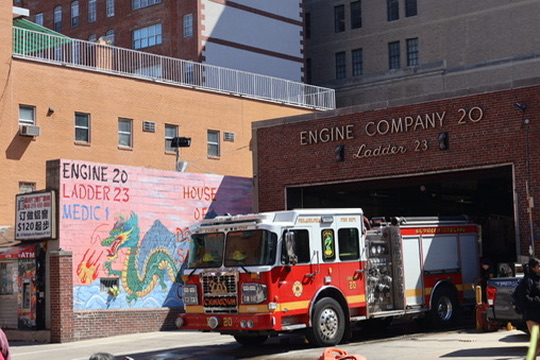
Dancing dragon: A painting depicts a dragon standing ferociously and breathing fire at the waves below. The mural, drawn in a traditional Chinese style, was located next to Engine Company 20, the fire station and only public facility in Chinatown. (Alivia Woo / The Spoke)
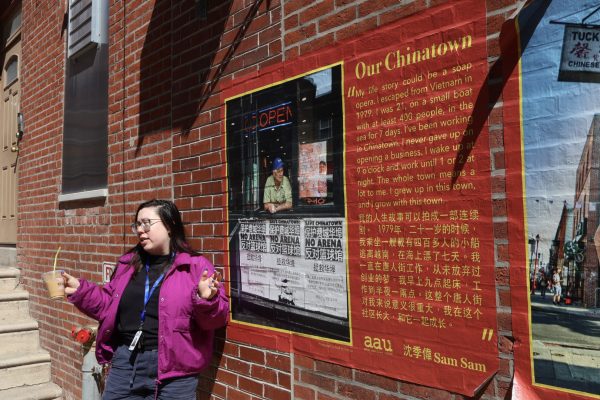
Magical memories: Tour guide Peri Law speaks on ‘Our Chinatown’, signs posted around the town featuring testimonies of long-term residents. ‘Our Chinatown’ was a project to maintain the special memories of the locals and their journeys throughout the town. Law continues as a youth coordinator at Asian Americans United (AAU), where she informs visitors of the importance of these signs. (Elizabeth Lu / The Spoke)
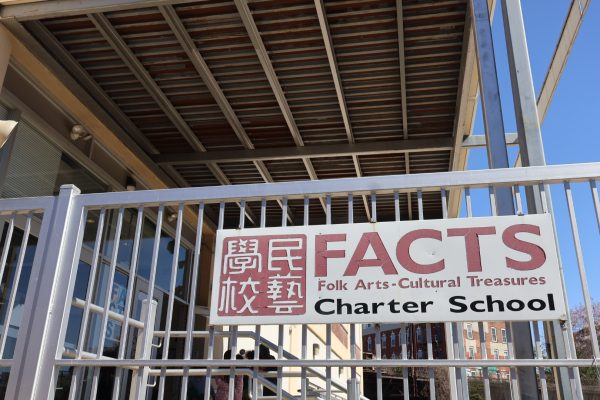
Breaking down barriers: The Folk Arts-Cultural Treasures Charter School (FACTS) acts as a central location for movements to preserve Chinatown, its residents and its history. Many people believed Philadelphia’s public schools did not provide enough support for English as a second language (ESL) students, so the founders of the FACTS Charter School created their own school to help newly-arrived immigrants, as well as teach them traditional Asian art styles. (Kimberly Wang / The Spoke)
Kimberly Wang is a freshman and a Staff Reporter for The Spoke. Outside of school, she enjoys staying home listening to K-pop, creative writing, drawing and reading fiction.