













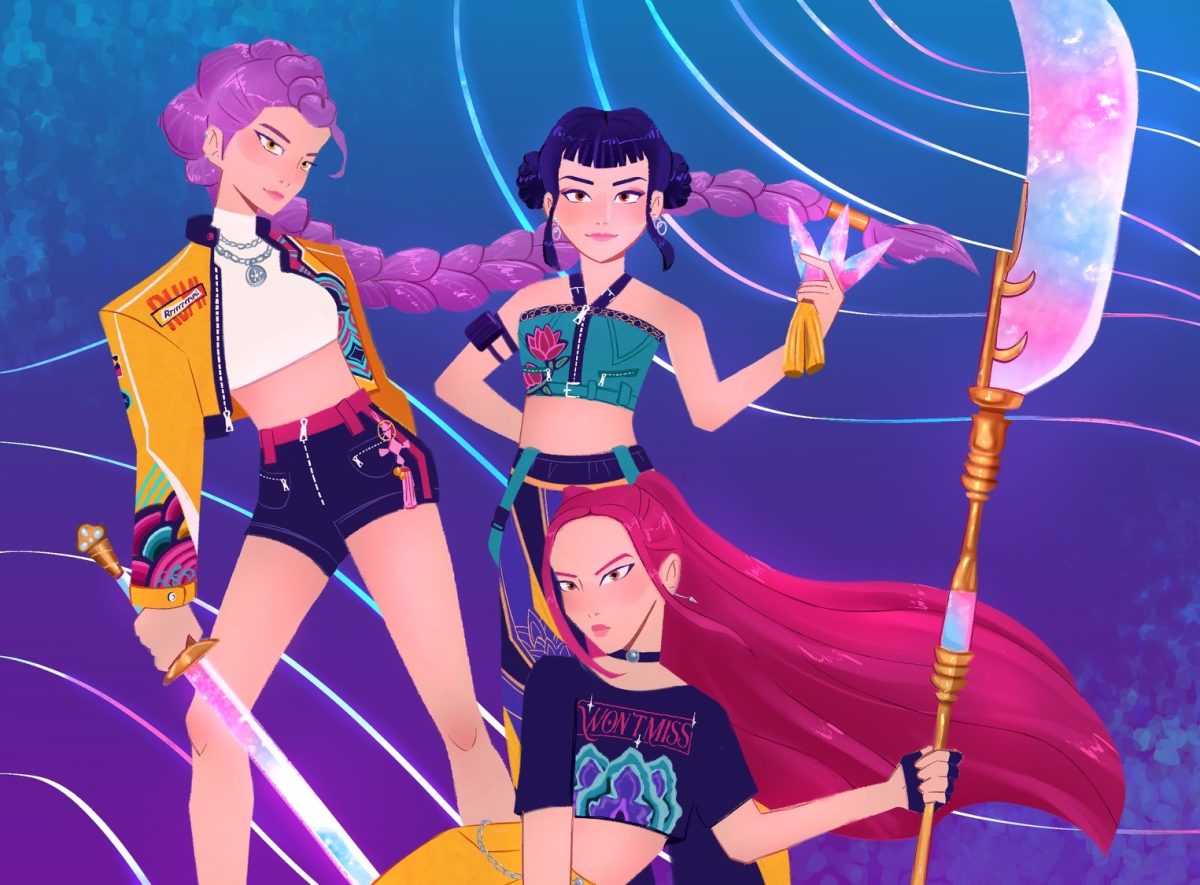























In elementary school, I was told my salwar kameez looked like a pair of pajamas. Now, the same silhouette of flowing fabric and embroidered jewel-studded trim, draped and graceful, is selling for $120 on a fast-fashion website with the name “bohemian wrap set.” There is no origin, no credit; just labeled as couture.
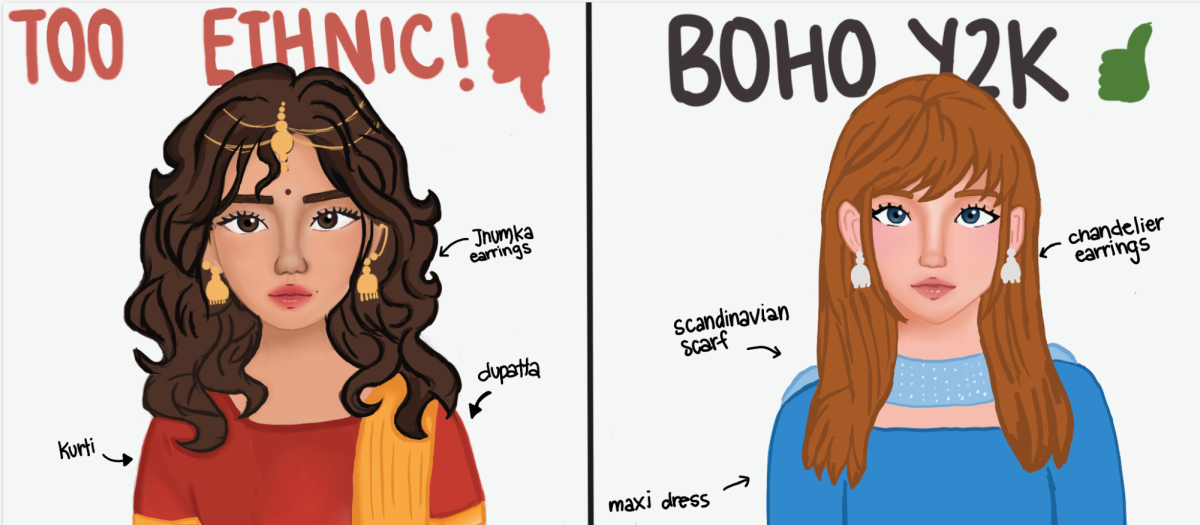
This phenomenon reflects the quiet, discriminatory nature of cultural erasure. It doesn’t always show itself. Sometimes it manifests as a TikTok trend, or as a Y2K throwback. Sometimes, it looks like a dupatta. A thin scarf-like garment worn across South Asia for centuries, it represents occasion and identity throughout all Desi cultures. This same traditional identity is now being repackaged and sold for double its price to a Western audience as a “Scandinavian scarf.”
South Asian students know this experience thoroughly. We grew up switching our wardrobes for the crowd by hiding our chudidars and dupattas until cultural events occurred, because walking through the hallway in a kurti would’ve invited weird looks. The smell of our food was “too strong,” our jewelry was “too loud,” our clothes were “too foreign,” and even our names were “too difficult.” The message, delivered in many small ways, was simple: Our culture didn’t belong.
But almost overnight, it did start to belong. Just without us in it.
The pattern is not new and not accidental. Brands like Ralph Lauren have sold chunky “chandelier” earrings, practically identical to the famous jhumkas of South Asia. Mehndi has been recycled as “boho body art,” turmeric as a “wellness superfood,” and chai mixed in with coffee sold as a “chai tea latte” (literally meaning “tea tea coffee”). Yoga, one of the most profound physical and philosophical exercises in history, is now associated with $100 Lululemon leggings. In each case, the aesthetic has always traveled from East to West, while the culture and credit stayed behind.
Social media has only sped up this process. Algorithms reward clean, light and aestheticized content. When a Western influencer posts a dupatta draped loosely over a linen outfit and captions it “Scandinavian minimalism,” it garners thousands of likes. When a Desi creator wears the same garment and calls it by its name, the engagement is gone. The erasure only represents the internalized racism of consumers and the resentment in associating something “aesthetic” with a culture that has been a laughing stock for decades. This racism happens in comment sections, trend cycles and even the language used to describe the clothing.
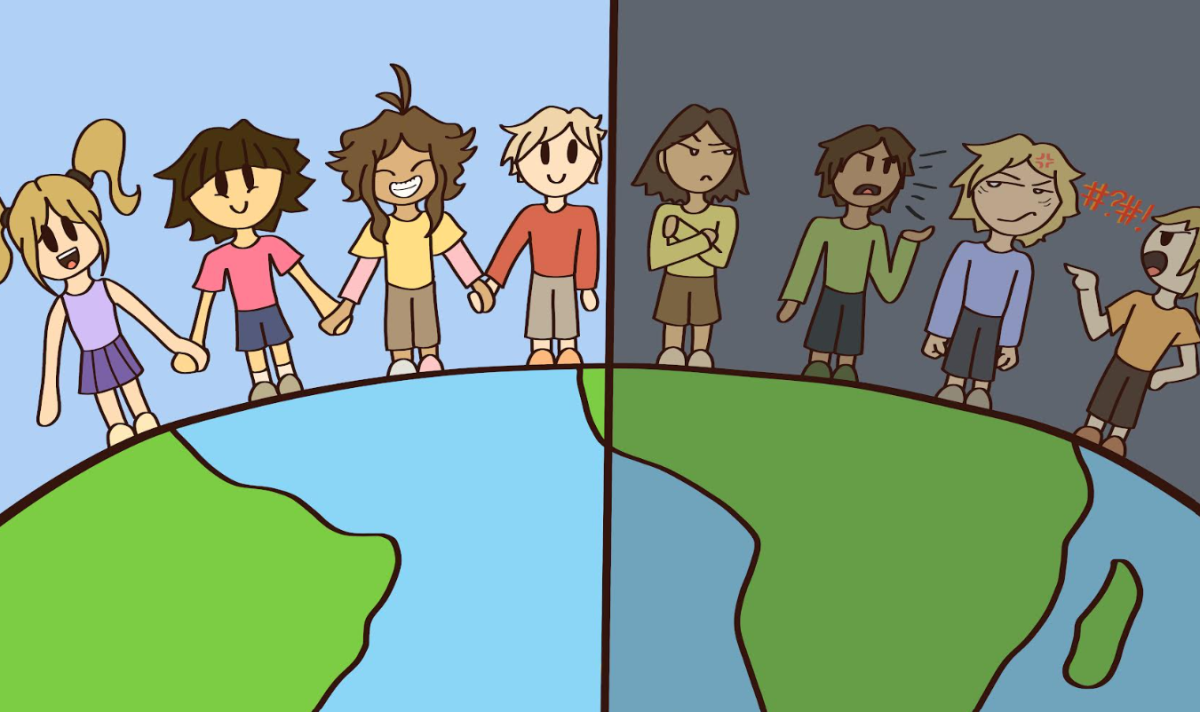
Some argue that fashion has always traveled. That cultural exchange is inevitable and in some cases, beautiful. And that’s true. But there is a clear difference between the exchange of culture and the extraction of one. Exchange requires respect and appreciation. Cultures that borrow from others and show credit display respect and the beauty of sharing tradition. Extraction is taking and rebranding, leaving the origin community to be mocked for what was stolen from them. When South Asian children are still being told their traditional dress is “too ethnic” for a school photo when the same style is being sold under a designer label, there is no exchange. There is only hierarchy displayed as a trend.
This doesn’t mean that a group of diverse people can’t share cultures. Anyone can wear a dupatta, jhumka earrings or a lehenga. And anybody can love the taste of chai, enjoy drawing designs with mehndi and relax with yoga. The only ask is to acknowledge where these traditions came from. To credit cultures that created them and to think critically before buying into a trend that has been scrubbed of its history. If you love the dupatta, love it by its true name. Love it knowing it belongs to a rich history that precedes Instagram by hundreds of years and love it in a way that makes room for the people who have always worn it and been ridiculed for it.
My dupatta is not a European scarf. It’s not a trend. It’s a piece of my culture that was never ready to be renamed and it’s time we started saying so.
Nikhisha Arjun can be reached at [email protected].