




















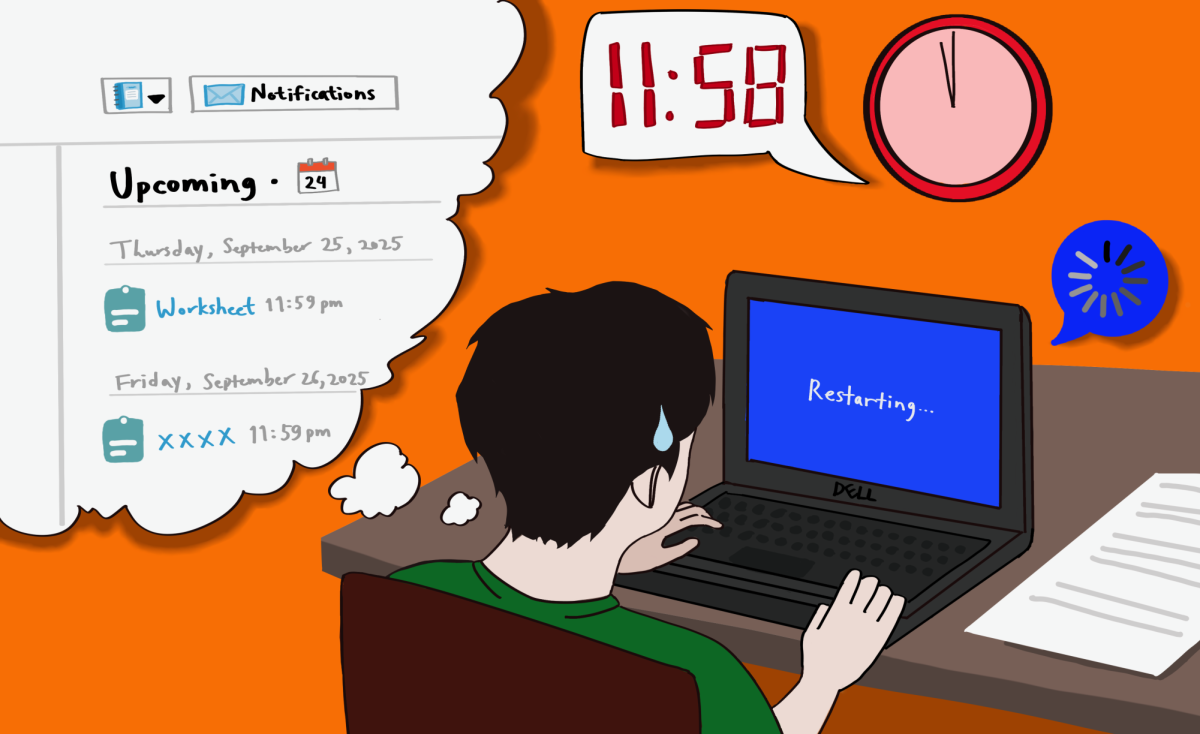
















This year, the Pennsylvania Department of Education (PDE) completed its transition of all state-standardized tests from paper-and-pencil exams to online testing. The state requires all public schools to administer standardized tests such as the Pennsylvania System of School Assessment (PSSA) and Keystone Exams for specific grade levels. In addition to the state, College Board, the nonprofit organization that administers Advanced Placement (AP) exams, has transitioned most AP exams to digital or hybrid formats.
According to Dr. Wendy Towle, TESD Director of Curriculum, Instruction, Staff Development and Planning, the district participated in a pilot of digital exams last year as a part of the state’s shift to digital exams.
“We had various grade levels as part of the pilot. (We were) really trying to learn as much as we could about what the actual assessment itself would look like, things that we might need to do a little bit differently as we prepared students for the assessments,” Towle said. “We still have (devices) available so that when students sit down to take a test online, it’s not the first time that they’ve been working with digital content or even taking an assessment online.”
The state’s transition to digital exams began in 2024, when Gov. Josh Shapiro announced in a press release the state’s plan to move all standardized testing online by 2026. Shapiro cited reduced costs, shorter test-taking time and faster test results as reasons for the state’s change in standardized testing.
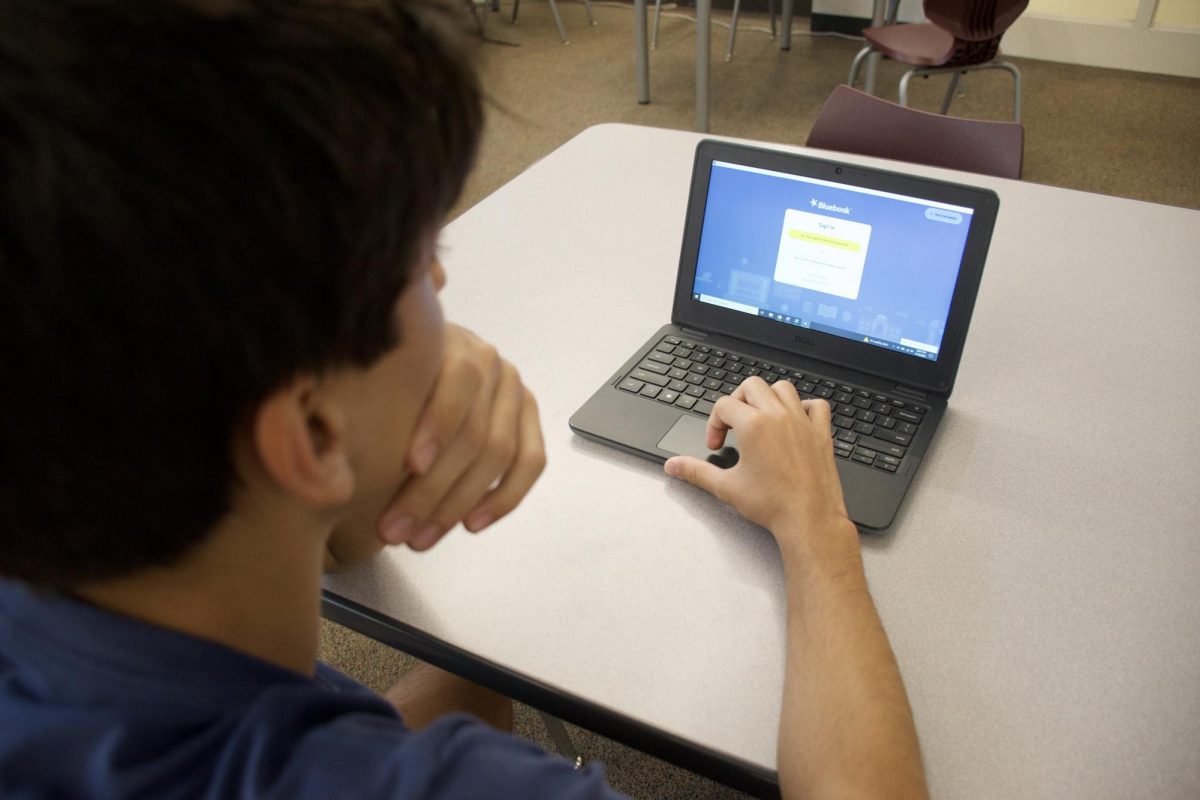
Additionally, in a 2024 press release, College Board announced it would be transitioning 28 of the 36 exams in 2025 to digital or hybrid formats. For AP digital and hybrid exams, College Board uses the application Bluebook to administer online exams. During hybrid exams, students complete the free-response questions in a paper exam booklet, which the school returns to College Board for grading. The software includes various tools College Board designed to enhance the students’ testing experience.
Emily McGready has taught AP World History: Modern for seven years at Conestoga and observed the switch to digital testing. She feels that Bluebook benefits students in testing sections such as writing.
“Bluebook has been pretty useful. They (College Board) incorporate a lot of different digital tools that students can use to highlight documents. They can mark up questions, flag questions for further review, and at the end of the day, there is a lot of writing for the AP World exam,” McGready said. “There are a lot of short-answer responses and essays, so being able to type them is a benefit for students compared to when they had to handwrite them.”
To help students prepare for online state-standardized testing, PDE provides a benchmark assessment platform called Firefly. Firefly features practice assessments that give students similar experiences to the testing platform on which they take the PSSA or Keystone exams. The state hosts these exams on DRC INSIGHT, which is the same platform students use to take the actual exams.
“They (students) take the Firefly assessment. Mainly, the practice is just to get used to the environment. We look at the scores and if there’s something that we can do to help students, (we will) move forward in a better way,” Towle said. “But (Firefly) is really to introduce students to this (testing) environment.”
Throughout the state transition to digital exams, there have been various technical issues with the new exam systems. According to Dr. Mike Szymendera, TESD Director of Educational Program, there was a service outage on the first day of the PSSA exam during which schools across the state were unable to access the test.
“That was an issue with the state testing application. It wasn’t related to our school district at all. It really had nothing to do with the individual school districts. It seems like (the state) just didn’t have the capacity, from a bandwidth perspective, to take all of those sessions at the same time,” Szymendera said. “They (the state) had to make some adjustments on their end to allow that all to happen, and it was smooth after that. The first day was definitely a little challenging. I think some school districts even had to postpone testing for the day. We were able to get by without having to do that.”
VFMS principal Matthew Gibson helped manage the PSSA exams. He plans to gather feedback from teachers to better understand the transition from paper-and-pencil tests to digital test-taking for the PSSAs to improve the experience in the future.
“I will meet with teachers and see what else we can do to best support the kids, to give them the opportunity to be the most successful. The teachers are the ones proctoring the exams and working with the kids the closest,” Gibson said. “We always do some form of after-action to see what we can do better (and) how we can best support everybody to be as successful as possible.”
Rajan Saha can be reached at [email protected].
Nolan Talley can be reached at [email protected].