

























On Jan. 3, U.S. military officials captured the former president of Venezuela, Nicolás Maduro, and his wife, Cilia Flores, from their private residence. According to the U.S. Department of State and Reuters, the Southern District of New York first charged Maduro for narcoterrorism, conspiracy to import cocaine, possession of destructive devices, and conspiracy to possess machine guns and destructive devices in March 2020. The Department of State stated that President Donald Trump authorized Maduro’s capture after the Department of Treasury issued a sanction on July 25, 2025 categorizing Cartel of Suns, an alleged Venezuelan drug trafficking network led by Maduro, as a Specifically Designated Terrorist group. Maduro’s capture prompted responses from various community members, with some organizing local demonstrations to express their reactions.
Liselotte Harrity is the treasurer and a founding member of the Philadelphia-based nonprofit Casa de Venezuela, a group dedicated to promoting Venezuelan culture. Harrity feels that those living in Venezuela underwent many challenges under Maduro’s presidency.
“Our reaction as a Venezuelan, individually and collectively, (Maduro’s capture) was a big happiness. This is something that we’ve been waiting for — for the last 26 years, since (Hugo) Chavez got in power in 1999. With all the promises possible about fixing the government, ending corruption, making lives better, no more poverty, you name it. He never delivered anything. Totally the opposite,” Harrity said. “The corruption became rampant, the government became bigger, the bureaucracy was at its highest. Then (Chavez) dies in 2013, and he appoints Maduro as his prodigy to continue his work. Maduro just made it worse, becoming more of a narco enabler, having Venezuela be the gateway of the narco traffic, the cartels, killings, disappearings, political prisoners.”
According to the U.S. Department of State’s informational webpage on Maduro, the National Assembly of Venezuela announced in 2019 that Maduro consolidated power and declared that it would not recognize him as the president of Venezuela alongside 50 other nations, including the U.S. To commemorate the end of Maduro’s control over Venezuela, members of Casa de Venezuela organized a prayer on Jan. 4 at the Basilica of Saint Peters and Paul in Philadelphia.
“The goal was just to get together and pretty much put our hearts and our hopes that the best is yet to come, and for the media to get our thoughts and information, and also for us to tell the truth about what’s the situation,” Harrity said. “Our gathering is actually to counteract or (counter) those rallies in favor of Maduro. It’s just to tell them Maduro is not a president and has never been a president of his own. He was a de facto person that was put in the presidency of Venezuela with no support from the people.”
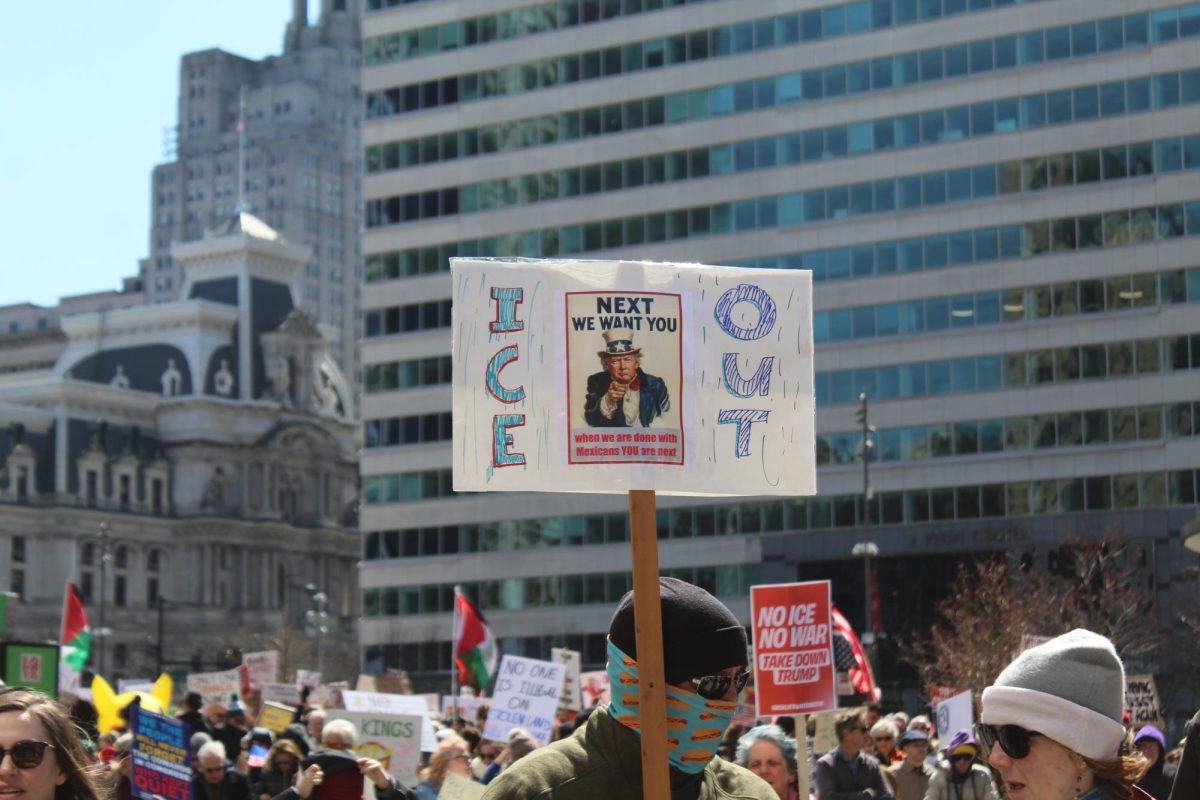
Other community members feel Maduro’s removal held significant political implications. On Jan. 4, around 500 residents in Chester County attended a “No War in Venezuela” rally organized by Indivisible Chester County, a chapter of the national Indivisible movement that emerged in 2017. Participants chanted and held signs to express concern regarding the removal of Maduro and to advocate against war and conflict. Shannon Browne, Indivisible Chester County’s social media committee chair and one of the rally organizers, feels that Maduro’s capture held foreign political impact regarding the U.S.’s future diplomatic relations.
“I think invading Venezuela was and has proven to be in the couple of weeks since, a precursor to other acts of aggression that we really, really need to be concerned about. Even though Venezuela did have a terrible dictator who gets no sympathy from me, however, it is a sovereign nation,” Browne said. “There are many other countries that have terrible dictators and the reasons given for the invasion, (but) not only was it illegal, not even run by Congress, it’s a complete (suppression) to them. (Trump) said he’s setting a precedent to do that to other countries.”
Along with political reflection, students considered the impact of Maduro’s capture on Venezuela’s future. Senior and president of the Latino Culture Club Sara Vallejo feels that Maduro’s removal is an optimistic event for the nation. According to the Associated Press, Venezuela recognizes former Vice President Delcy Rodríguez as an interim president of the nation.
“Violence is never the way to solve absolutely anything. However, I do think that (Venezuelans) were in really, really bad conditions politically (and) socially. I feel like such a strong and traumatic event like this has potential to make the people in Venezuela live a little bit better, at least in the long run,” Vallejo said. “This has potential to make Venezuela great. This has potential to help the citizens. This has potential to make the economy a little bit better, make living conditions better. Not because of who is taking over right now, but just because (Venezuelans) are free from an illegitimate government.”
Tvisha Jani can be reached at [email protected].